
Stephen Benton
British Refrigeration Association (BRA)
Stephen Benton
British Refrigeration Association (BRA)
Stephen Benton of BRA explains two important regulations and highlights factors to consider during design and installation of pressure systems to help achieve compliance.
The EU Pressure Equipment Directive (PED)is one of many EU directives. They lay down basic rules for construction to ensure a consistent level of safety and to enable free trade. Compliance is demonstrated by a CE mark, backed up by a Declaration of Conformity.
Directives are transposed into national regulations; in the case of the PED this is the Pressure Equipment (Safety) Regulation (PE(S)R) in the UK. The PED has been in place since 2002, and post Brexit we still comply with it because it is a UK regulation (and because it is a practical way of ensuring pressure systems are safe).
Technically the PED and PE(S)R are identical, but there are some minor differences. These don’t affect the design of the system but they might impact how you demonstrate compliance. This article refers to PED for simplicity, but everything applies equally to the PE(S)R.
The PED, like other directives, is not a design guide. It lays down basic rules and lists essential safety requirements. However, to make things simpler, there are European standards (such as EN 378-2) which are harmonised with the PED. Following the specified clauses in the standards meets the relevant essential safety requirements. For example, strength testing a system to EN 378-2, clause 6.3.2 (Strength pressure test) meets the PED essential safety requirement for a proof test.
The PED applies to any system that runs at a pressure of more than 0.5 bar g, with a few exceptions which are not relevant to us. So, it applies to RACHP systems. It applies to systems when they are first put on the market – so it is for new systems, not existing systems (unless an important change is made).
Manufacturers of RACHP systems must demonstrate compliance with the PED. If you are installing a site-built or connected system, then you are classed as the ‘manufacturer’ of that system.
If you are installing a system in the EU (e.g. in Ireland) or in Northern Ireland it must comply with the PED, be CE marked and be assessed by a notified body (in Northern Ireland a UKNI mark can be used). A notified body is a third-party organisation authorised by an accreditation organisation in the EU.
If you are installing a system in Great Britain (England, Scotland and Wales) it must comply with the PE(S)R but can be either UKCA or CE marked and therefore be assessed by an Approved Body or a Notified Body.
A summary of the compliance procedure is as follows:
Determine the PED category of each component and the complete system, based on refrigerant type, maximum allowable pressure (PS), and volume or pipe size
Required for Category II, III, or IV systems, they will review your technical documentation and may need to witness strength testing
Include system drawings, pressure ratings, risk assessment, and qualifications. Show how the design complies with the essential safety requirements, typically by following relevant harmonised or designated standards
Test at the correct pressure; some tests must be witnessed depending on the category
Apply CE or UKCA mark and issue a Declaration of Conformity
Individual components in the system and the complete system have a hazard category. This is determined from the type of component (piping, vessel, pressure accessory or safety accessory), the refrigerant, maximum allowable pressure (PS) and size. In essence things which are bigger and/or have greater PS and/or run on a more dangerous refrigerant have a higher hazard category.
There are five categories, I to IV are formal hazard categories:
The notified or approved body assessment is more onerous the higher the hazard category. For example, for systems which are hazard category IV the notified/approved body will usually need to witness all strength testing.
The hazard category of the complete system is simply the highest individual hazard category, ignoring safety accessories such as PRVs which are always category IV.
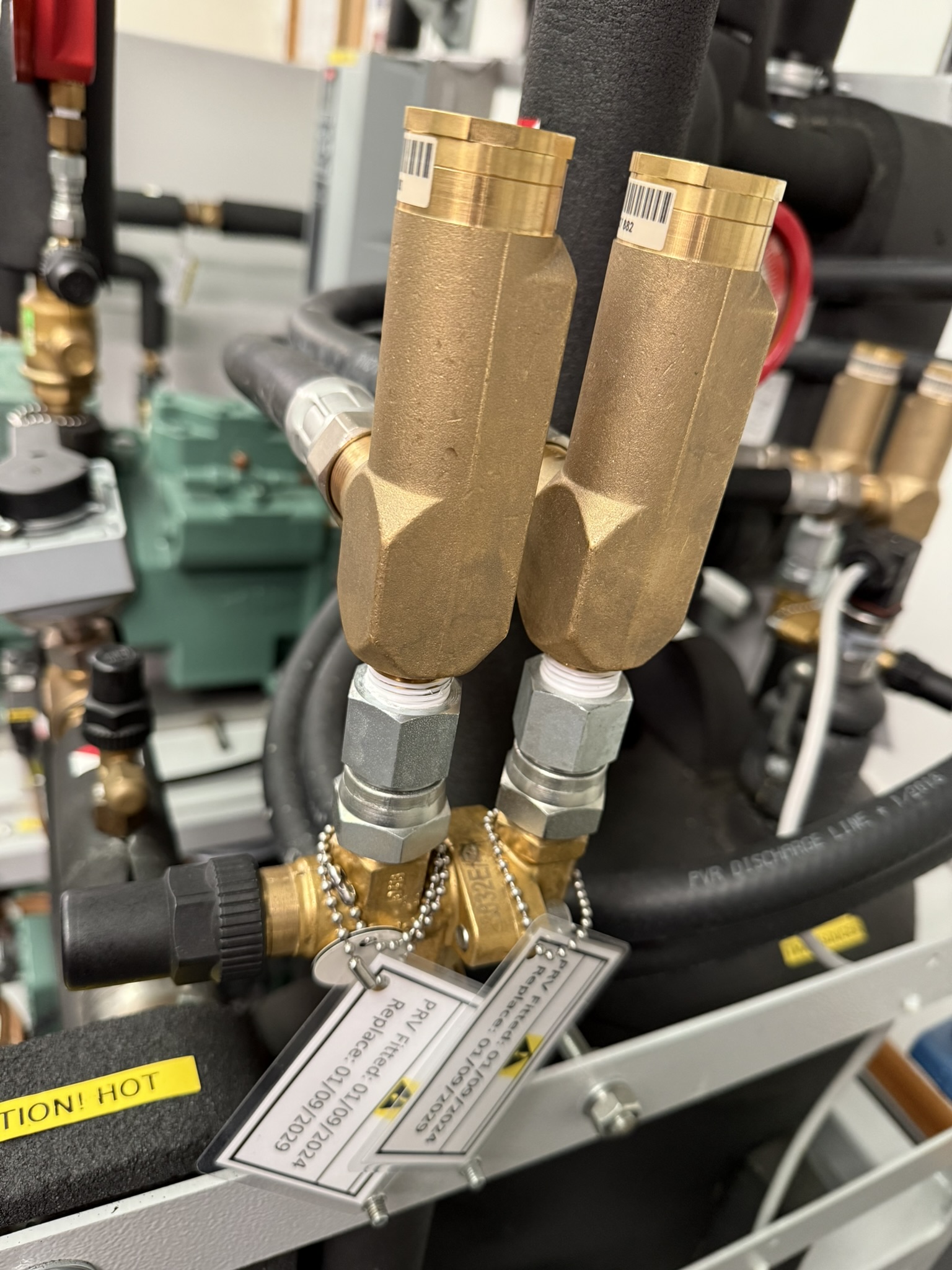
Installing contractors need to be aware of the system hazard category but also the category of all the joints on the system (pipe to pipe and pipe to component):
Most joints are SEP or category I, but larger R744 systems and many systems using flammable refrigerants (e.g. A2Ls) have joints which are category II or higher.
A risk analysis must be carried out identifying hazards associated with pressure and showing how they are eliminated or reduced and what protection methods are used. The essential safety requirements listed in the PED form the basis of this risk analysis. Most of the risks which are relevant to RACHP systems are met through compliance with harmonised standards.
The most important elements of the risk analysis cover:
Compliance with the PED is usually demonstrated by design and technical files (technical documentation). These primarily comprise the following information:
Design file:
Technical file:
These are submitted to the notified / approved body for category II, III and IV systems several weeks before the system is to be pressure tested.
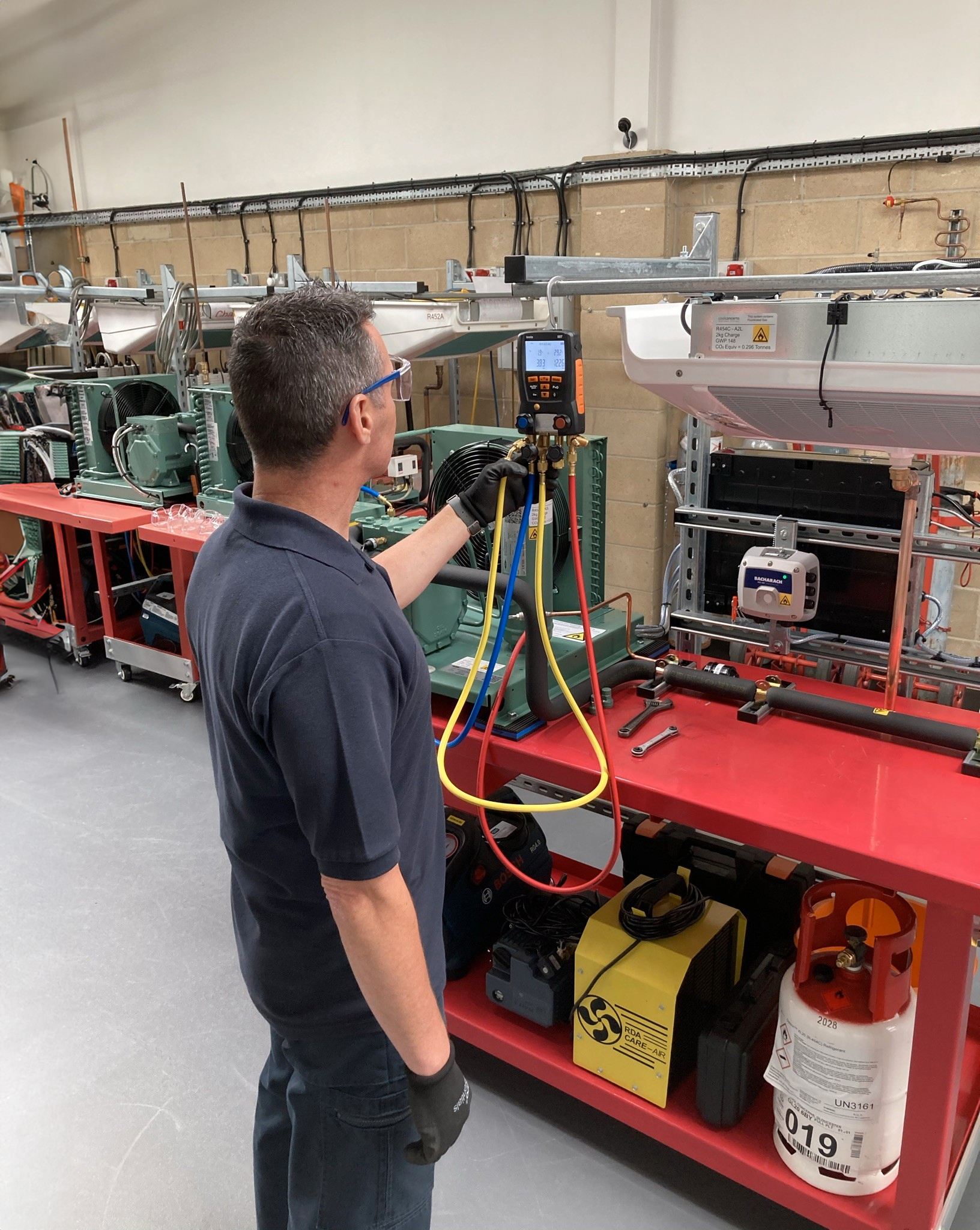
Before the system is installed it is important that you:
The PED is a legal requirement in the UK under the PE(S)R. It is there to ensure pressure systems are safe and in the 23 years since its introduction has led to more consistent design and improved installation practices.
The result is safe, more reliable systems with reduced leakage, and of course, compliance with the law.
In this short article it is not possible to provide all the information you need to install PED compliant systems and to demonstrate compliance – contact the BRA if you need further information.