
Josh Collins, Heat Network Manager
Altecnic

Josh Collins, Heat Network Manager
Altecnic
Josh Collins, Heat Network Manager for Altecnic explains why BESA’s HIU Test Regime is supporting better performance for the low-carbon heat networks of the future.
The UK’s transition to low-carbon heat networks is about scale and quality. With over 50,000 heat interface units (HIUs) installed each year, ensuring these devices perform to a consistently high standard has never been more urgent. Poorly performing HIUs can impact the overall health of a heat network which leads to higher energy costs for consumers.
The industry knows this, but until recently there was little in the way of clear, comparable, and independently-verified performance data. Without a common benchmark, it was a challenge to know how different HIU’s performed, or whether design promises hold up in real life.
That is why the BESA HIU Test Regime is such a pivotal development. Supported by government-funded research in 2016 and refined by the Building Engineering Services Association (BESA) in 2018 and 2023, the regime has transformed HIU evaluation from an opaque process into a transparent, consumer-led benchmark.
Today, it stands as the recognised measure of performance, integrated into CIBSE CP1 (2020) and increasingly influential as Ofgem prepares to regulate heat networks through the Heat Network Technical Assurance Scheme (HNTAS).
What makes the BESA regime essential is its consumer-first approach. Established as a not-for-profit, it is entirely independent of any single manufacturer’s interests. Instead, it provides:
The 2023 update expanded the scope significantly. It introduced modular testing across space heating and hot water, set new performance thresholds, and strengthened the focus on return temperatures through Volume-Weighted Average Return Temperature (VWART) calculations.
It includes standby energy use measurements and revised hot water response time requirements, ensuring that HIUs are judged not only on speed and comfort but also on their ability to support low-carbon efficiency in real-world networks.
This dual focus, with compliance thresholds for baseline performance and best practice for aspirational excellence, is central. Pass/fail ensures that minimum consumer expectations are met, while best practice provides a signal to specifiers and developers: if you want networks that are truly efficient, reliable, and futureproof, choose products that go further.
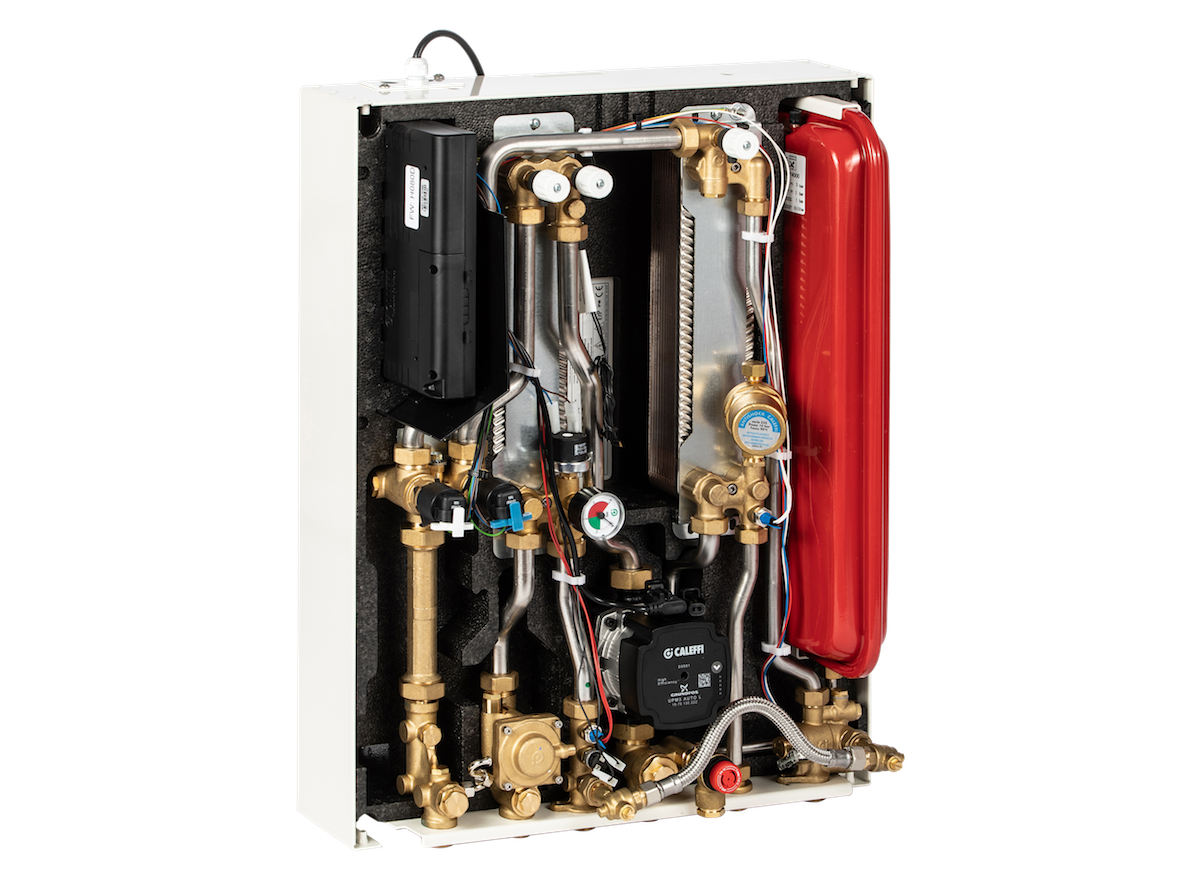
Altecnic put its SATK32107 HIU through the the latest BESA test regime (V3-Rev001, 2023). The unit cleared all four indirect test modules and multiple best practice outcomes.
The test results highlight:
These results confirm the SATK32107 is not only compliant but futureproofed for the UK’s next generation of heat networks, where low return temperatures and efficient standby management are essential.
As we move through 2025 and beyond, the significance of the BESA HIU Test Regime grows even further. Heat networks are no longer a niche solution; they are central to the UK’s decarbonisation strategy, expected to supply nearly a fifth of homes by 2050. In that context, independently-verified HIU performance becomes mission-critical.
At the system level, this matters most. Lower return temperatures, reduced standby losses, and proven hot water response times are not just performance metrics, they are enablers of the low-carbon transition. They allow networks to integrate large-scale heat pumps, make better use of waste heat, and operate at the lower flow temperatures essential for efficiency.
In short, the HIUs being tested today are laying the foundation for the heat networks of tomorrow, and by extension, for the UK’s ability to meet its net zero targets.
Beyond individual benefits, the BESA HIU Test Regime is driving a shift in the sector as we look to the future. By introducing strict pass/fail criteria, it prevents underperforming products from undermining entire heat networks. By setting best practice benchmarks, it challenges manufacturers to go beyond compliance and deliver products that set new performance levels.
The dual framework of pass/fail thresholds and best practice benchmarks is already changing how manufacturers approach R&D. Compliance is no longer enough; the expectation is to exceed, to innovate, and to prove performance under scrutiny.
This is already driving outcomes:
As regulation tightens, networks expand, and net zero deadlines shorten, the BESA test regime becomes more than a quality mark, it becomes a mechanism for continuous improvement. By 2030, the sector will look back on these years as the period when HIU performance matured from variable and opaque to standardised and transparent.
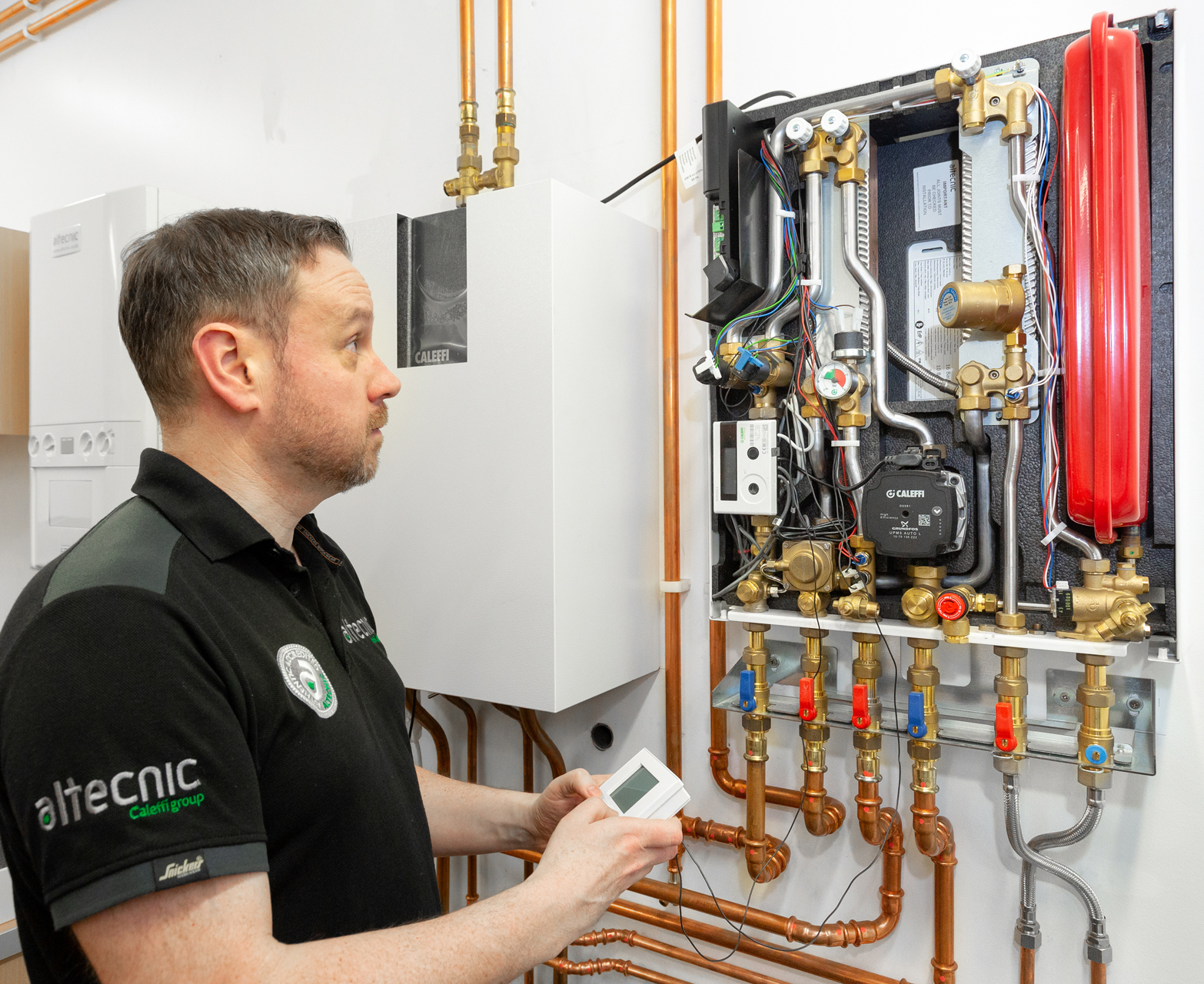
Altecnic’s SATK32107 is an example of what that trajectory looks like in practice: a unit that not only passes every compliance test but performs strongly against best practice.
The bigger impact of this can be seen across the market, with independently validated excellence setting the baseline for what networks, regulators, and consumers expect.
The message for 2025 and beyond is clear: robust standards plus proven performance equals trust, scalability, and climate delivery. Without it, the UK cannot build the heat network infrastructure required for net zero. With it, the sector can deliver reliable, sustainable, and consumer-friendly heating for decades to come.
As the UK accelerates its transition to low-carbon heat, the performance of HIUs will be under sharper focus than ever. The updated BESA HIU Test Regime has provided the sector with what it lacked for so long, a transparent, independent, and rigorous framework that separates proven performance from marketing promise. It has set a baseline for compliance, while also pointing towards best practice that challenges manufacturers to innovate.
For consultants, developers, and operators, the value is clear: reliable data to inform design, specification, and long-term operation. For end-users, it means networks can deliver what they promise, efficient systems, lower costs, and fast, dependable hot water. And at the system level, it ensures that networks are not just functional today, but ready to integrate the low-carbon technologies essential for tomorrow.
Looking ahead, as Ofgem’s Heat Network Technical Assurance Scheme comes into force, the combination of robust testing standards and proven compliance will underpin consumer confidence and unlock investment in district heating at scale. The HIU may be just one component, but its influence on the efficiency, reliability, and perception of heat networks is profound.
The future of UK heat networks will be built on two pillars: defined standards and validated excellence. With BESA’s regime now embedded in industry practice, and with manufacturers rising to the challenge, the path to 2030 and 2050 looks clearer. High-performing HIUs will help make the transition possible.