
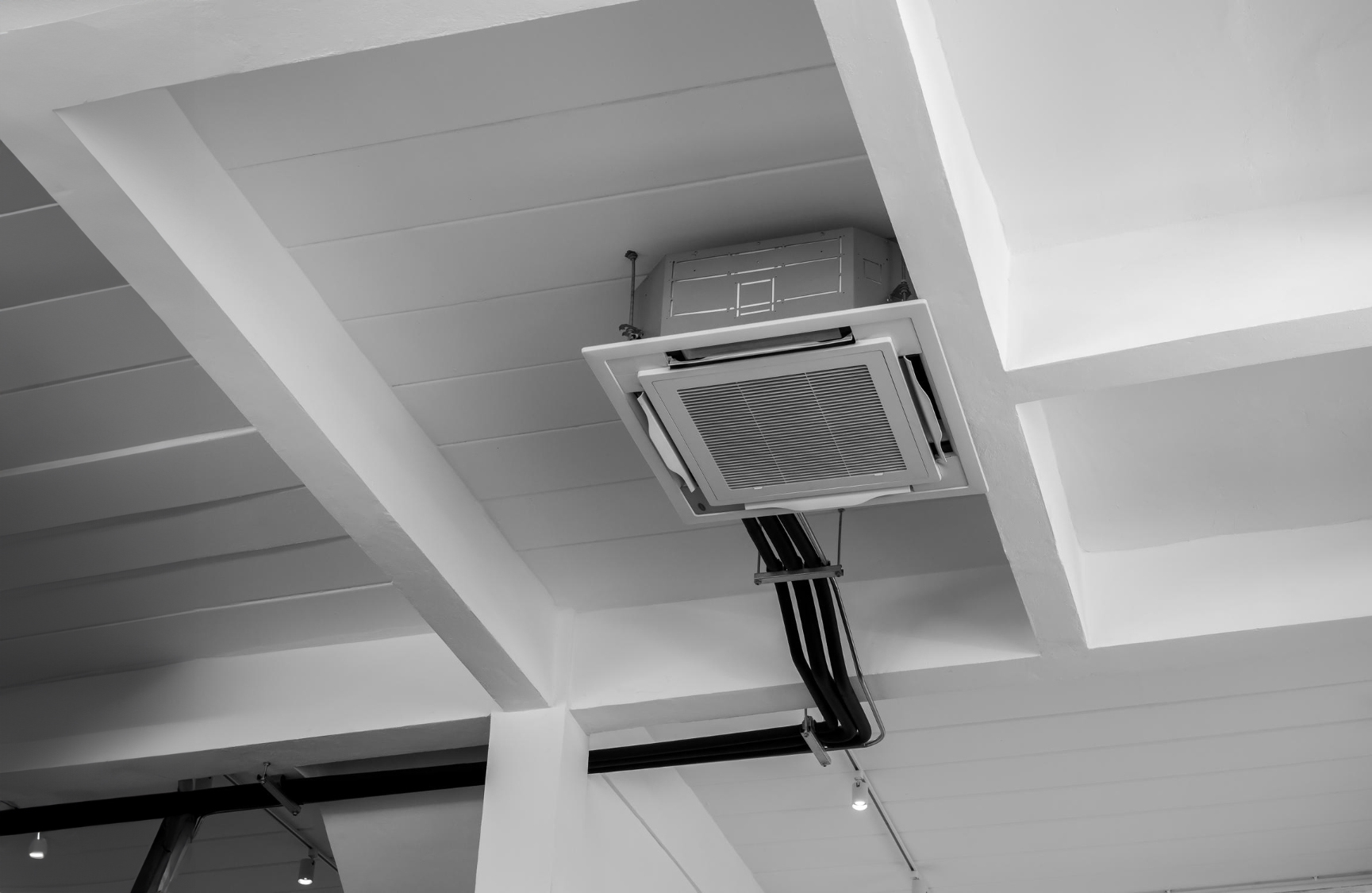
Fan coil units – optimising use across the lifespan of the building

Barry Trewhitt, President of HEVAC, looks at how to get the best out of fan coil units throughout the life of a building.
Getting the best out of fan coil units starts with the design of the building. Units should be sized correctly for the space they are serving. Undersized units may struggle to maintain desired temperatures, while oversized units can lead to temperature fluctuations causing reduced efficiency and uneven comfort levels.
As the output of a fan coil unit is intrinsically linked to the water temperatures, ensure that all the terminal unit equipment, not just the fan coil units, is selected based on realistic and achievable water temperatures, not just arbitrarily chosen design values.
Fan coil units should be properly positioned to address local heat gains or losses from external sources such as direct sunlight, exterior walls, or windows. Units with higher cooling demands (IT rooms, higher occupancy offices) must be sized appropriately. Heating and cooling loads should be estimated from industry guidance such as CIBSE Guide B or BSRIA Rules of Thumb.
Control strategies should be structured to complement the operation of the fan coil unit, rather than hinder it. By using variable speed fans and larger heat exchangers, fan coil units can be used to heat, or cool areas quickly, compared to other heating systems like underfloor heating, optimising energy and carbon savings.
Occupancy detection
Occupancy detection, using widely and commercially available PIR sensors or CO2 monitoring, can be integrated with modern access control systems to build an accurate picture of who is in a building. Less frequented areas can then use a wide-ranging setback temperature as thermal comfort becomes less important. Areas that are occupied infrequently can have even wider ranging setpoints focused on protecting the building’s fabric or contents.
Integration into the building’s ventilation system should be defined to allow for free cooling and indoor air quality. Fan coils are typically just recirculation devices, and by integrating with AHUs, the fan coil can add better localised thermal comfort as required. In addition, fan coil units are used to aid air distribution around spaces more evenly.
Fan coil units with EC motors are now deemed an industry standard due to the Specific Fan Power (SFP) requirements in UK Building Regulations Part L. Beyond improved SFPs, they also allow for variable speed control of the fan. Unit controls from either the fan coil manufacturer or a systems integrator should make use of this and ensure that the fan speeds can ramp up or down to suit the duty requirements of the space.
Installation
Installation of fan coil units is one of the best opportunities to build in quality to the M&E package of the project. Picking up from the design stage, the installation contractor should avoid value engineering fan coils with simpler controls, smaller units, or inferior quality components.
Once activities on site start, units should be installed in locations that allow access for servicing and maintenance to ensure the unit can kept in working order. Particular attention should be paid to the positioning of sensors, and to ensure that localised draughts from other fan coil units or other services are kept to a minimum.
Manufacturers will qualify their units’ acoustic performance based on typical installations and it’s important these are followed to achieve expected performance. The generally accepted installation is spiral wound ductwork, and it should be the same diameter as the fan coil units’ spigots, with flexible ductwork used on the last meter.

Unused spigots should be considered in the context of the fan coil unit schedule issued by the manufacturer to ensure that in-duct air velocities are controlled. Properly sized ductwork combined with suitably placed diffuser boxes will help to maintain comfort levels and minimise temperature variations.
Pipework to the unit should be well insulated with all exposed parts of the hydronic system covered. Where pipework joins the unit, the insulation must extend over the drain tray to avoid condensation forming and dripping onto the ceiling below.
While fan coils are typically about ducting on the supply air side, the return air path is equally important. This should be clear of any obstructions, and the units can draw either from the ceiling void or a ducted intake. Installations where the fan coil unit supplies air from one space into another with no discernible air path between them should be avoided.
Commissioning
The importance of commissioning a project cannot be understated and should be completed by experienced, knowledgeable engineers who understand the systems and the intent of the design.
All fan coil unit manufacturers will include guidance in their product instructions on what and how to commission their units and this should be followed closely.
Consideration should be given to both a ‘Winter’ commissioning (of heating systems) and a ‘Summer’ commissioning to ensure the unit control and functionality is correct.
Usage
Throughout the use phase of a fan coil unit’s life, there are steps that can be taken to get the best use out of the unit. Firstly, simple controls should be used to keep any user education to a minimum. Some ask for an explanation of the fan coil unit controls to be printed and placed next to the wall controllers to explain their operation to occupants.
Whether the building uses fan coil units or not, there is always a benefit to educating occupants about energy-saving practices. Simple actions such as closing windows and doors, adjusting blinds to block direct sunlight, and avoiding unnecessary use of fan coil units can help conserve energy and maximise the building system’s efficiency.
As the use of buildings change and adapt over time, it’s likely that the demands on the building services for that room will also be impacted. Building owners should consider whether these changes will require more heating, cooling, or ventilation.
Maintenance
Good maintenance starts with a plan, and this should cover unit locations, the schedule of work needed and the training and development of those completing the work.
In the current age of facilities management companies, most building owners will outsource this work to third parties, but the levels or service offered and skillsets available should be agreed up front.
Building operators and maintenance staff should be trained regularly on the proper operation, maintenance, and troubleshooting of fan coil units. Well-trained personnel can identify issues early, perform preventive maintenance tasks, and ensure optimal performance of the equipment.

Typical routine maintenance activities include cleaning or replacing of air filters, inspecting coils for dirt build-up, ensuring proper drainage of condensate systems checking and lubricating fan motors (if required).
Fan coil manufacturers should be consulted about installing enhancement features (such as UV germicidal lamps) that specifically target indoor air quality for their products.
Whilst the cleaner air enhances occupant comfort and prolongs the lifespan of the FCU components, this has to be balanced with the impact on the fan coil unit itself. Highly resistive or fine filters (such as HEPA) should be avoided as they typically require stages of prefiltering to avoid becoming quickly blocked, resulting in severe degradation of the fan coil units’ performance.